Cricket’s rarest mode of dismissal—Timed Out—has returned to global discussion, reigniting debate over the balance between the Laws of Cricket and the spirit of the game.
What Is ‘Timed Out’ in Cricket?
Under Law 40, an incoming batter must be ready to face the next delivery within a specified time after a wicket falls. The limit is three minutes in Tests and ODIs and 90 seconds in T20 cricket. Failure to do so can result in a timed-out dismissal, provided the fielding side appeals.

Angelo Mathews Incident: A Historic Moment
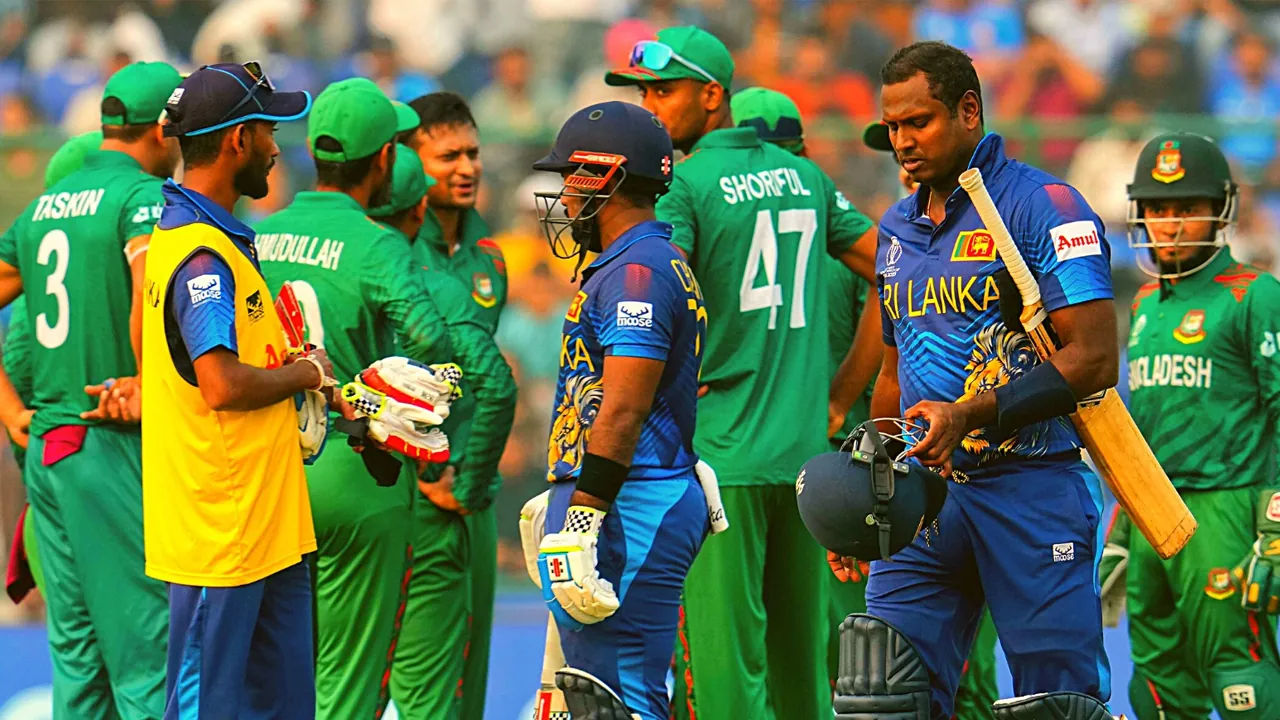
The law drew worldwide attention during the 2023 ICC Cricket World Cup, when Sri Lanka’s Angelo Mathews was declared timed out against Bangladesh. The incident—triggered after Mathews exceeded the time limit while dealing with helmet equipment—became the first timed-out dismissal in international cricket, sparking intense reactions across the cricketing community.
Supporters of the decision argued that strict enforcement is necessary to prevent time-wasting, especially in limited-overs formats where delays impact the match flow. Critics, however, maintained that equipment-related issues should be treated with discretion, citing the sport’s long-held emphasis on sportsmanship.
Impact on Modern Cricket
Historically, the Timed Out rule has existed for centuries but remained largely unused due to informal allowances and a reluctance to appeal. The World Cup incident has changed that perception, prompting teams and players to pay closer attention to time regulations.
With cricket becoming faster and more result-driven, experts believe the law is likely to be applied more strictly going forward. While controversy remains, Timed Out is no longer just a forgotten clause—it is now a real factor in modern cricket.
crifosports/9December25/AZ











More in Cricket
-


‘ICC Is the basically Dubai Branch of the BCCI’
Renowned Indian journalist Sharda Ugra has once again commented on the ongoing controversy surrounding...
-
Finally ICC Throwing Out Bangladesh From World Cup
The International Cricket Council (ICC) has excluded Bangladesh from the upcoming T20 World Cup...
-
ICC won’t shift Bangladesh’s Matches from India
The International Cricket Council (ICC) has given the Bangladesh Cricket Board (BCB) one final...
-
World Cup in India: Pakistan Voices Support for Bangladesh
Amid growing uncertainty over the upcoming T20 World Cup to be held in India,...
-
ICC Delegates to Visit Bangladesh as a ‘Last Effort’
Bangladesh’s participation in the upcoming ICC T20 World Cup remains uncertain as a high-level...
-
Next Generation Cricket Stars Chase Glory This Year
The ICC Under-19 Men’s Cricket World Cup 2026 is set to bring together the...
-
Bangladesh won’t play T20 World Cup in India
A virtual meeting between officials of the International Cricket Council (ICC) and the Bangladesh...
-
Bangladesh’s Venue Request Puts ICC in a Delicate Position
The global cricket community continues to closely follow developments surrounding the proposed change of...